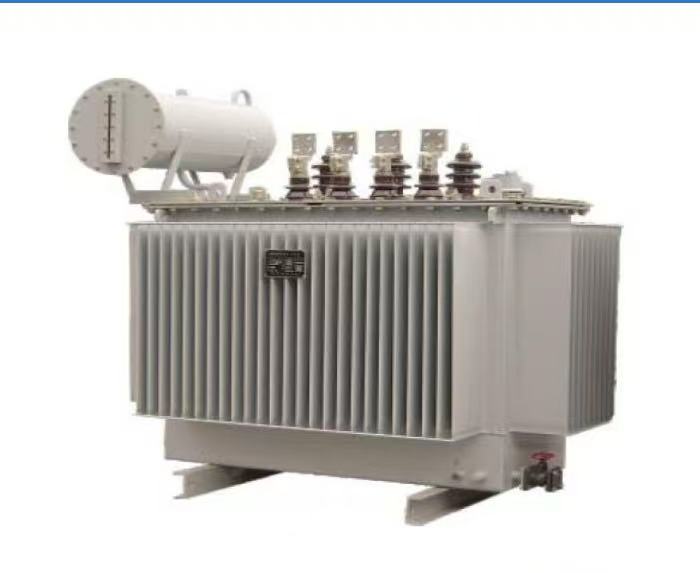
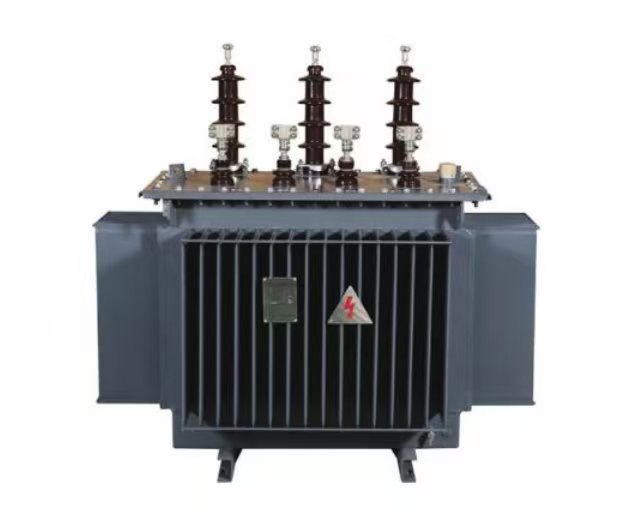
Special Purpose Transformers
1.Strong overload capacity, able to withstand short‑term high‑load operation and cope with peak and impact loads.
2High power supply reliability, excellent temperature rise control, strong short‑circuit and harmonic resistance, low failure rate.
3.Good economy, no need for frequent capacity expansion, reducing investment and operation costs.
4.Wide adaptability, suitable for scenarios with large peak‑valley difference, busy farming seasons, industrial impact loads, etc.
5.Green and environmentally friendly, low loss and low noise, meeting energy‑saving and environmental protection requirements.
Product Details of High Overload Special Transformer
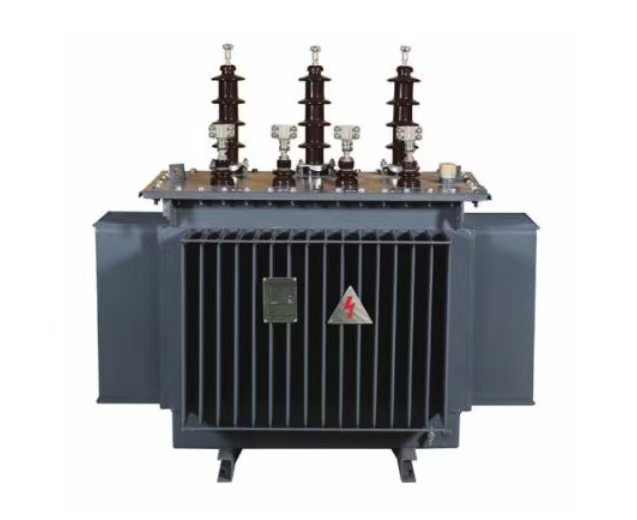
High overload special transformer is a special power equipment specially developed for scenarios with large load fluctuations, prominent short-term peak loads and the need to avoid frequent capacity expansion. Its core advantage is that it can withstand short-term high-load operation for a long time without affecting the service life of the equipment, balancing power supply reliability, economy and environmental protection. It is widely used in rural power grids, industry, urban distribution networks and other fields. The following is a detailed description of parameters and characteristics.
1. Core Performance Parameters (Precisely Adapt to Various Scenario Requirements)(Customizable)
Overload Capacity (Core Highlight)
Adopting optimized electromagnetic design and heat dissipation structure, the overload performance is far superior to that of conventional transformers. The typical overload standard is 1.5 times the rated load for 8 hours, 1.75 times the rated load for 5 hours, and 2.0 times the rated load for 1 hour. Some customized models can achieve 2.2 times the rated load for 30 minutes of short-term operation, which can effectively cope with sudden high loads such as seasonal peaks and equipment start-up impacts, and avoid equipment burnout and power supply interruption caused by overload. At the same time, it supports long-term continuous operation at 1.1 times the rated load, adapting to normal load fluctuation scenarios.
Insulation Class and Insulation Performance
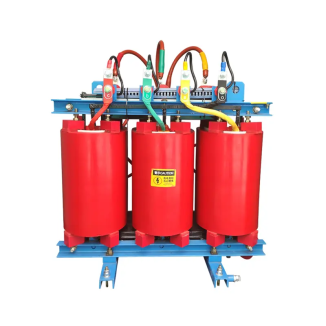
The mainstream adopts Class F (maximum allowable temperature 155℃) and Class H (maximum allowable temperature 180℃) insulation design, which can be upgraded to Class C according to scenario requirements. The core insulation materials are DuPont NOMEX® insulation paper, high-quality epoxy resin (dry-type) or natural ester insulation oil (oil-immersed), which have high insulation strength, excellent heat resistance, strong anti-aging and anti-humidity capabilities. They can maintain stable insulation performance under overload and high-temperature conditions, effectively extend the service life of the equipment, and meet the use requirements of harsh environments such as outdoor, humid and high-temperature.
Loss and Energy Efficiency Level
The iron core is made of low-loss oriented silicon steel sheet or amorphous alloy material. The no-load loss of the amorphous alloy model is 30%~50% lower than that of conventional transformers, and the load loss is 15%~25% lower, fully meeting the national Level 1 energy efficiency standard, and some products reach super Level 1 energy efficiency. By optimizing the winding structure and selecting oxygen-free copper conductors, the circulating current and stray loss are reduced, and a large amount of electricity costs can be saved during long-term operation, which is in line with the "double carbon" energy-saving and consumption-reducing requirements.
Temperature Rise and Heat Dissipation System
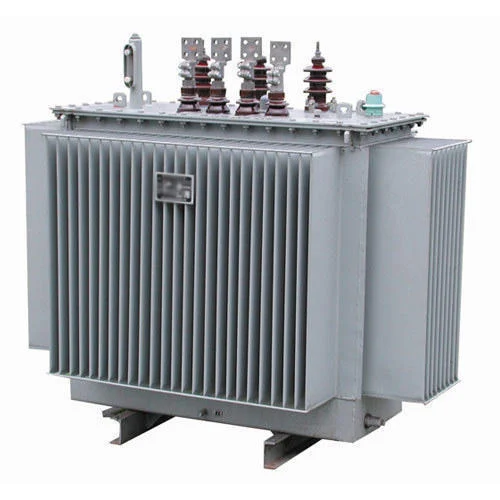
The oil channel (oil-immersed) and air channel (dry-type) structures are optimized for overload conditions to ensure rapid heat conduction. Oil-immersed products are equipped with corrugated oil tanks and finned radiators, and can be optionally equipped with forced oil circulation cooling system (OFAF); dry-type products adopt air natural cooling (AN) or forced air cooling (AF), and some high-end models are equipped with intelligent temperature-controlled fans, which can automatically start and stop according to the winding temperature, strictly controlling the winding temperature rise during overload within the allowable range, avoiding insulation aging caused by high temperature, and ensuring long-term stable operation of the equipment.
Anti-interference and Stability Performance
The mechanical structure design is strengthened, the iron core and winding are firmly fixed, and the short-circuit resistance is strong, which can withstand the impact of sudden short-circuit current without damage; it has excellent anti-harmonic and anti-unbalanced load capabilities, can adapt to harmonic interference generated by industrial equipment (such as electric furnaces, frequency converters), reduce voltage fluctuations, and ensure power supply quality; it is equipped with complete lightning protection and overvoltage protection devices, reducing the impact of harsh weather and power grid fluctuations on the equipment, and the failure rate is more than 40% lower than that of conventional transformers.
Noise and Protection Level
By optimizing the iron core lamination process and winding technology, the electromagnetic noise is reduced. The noise of dry-type transformers is ≤55dB, and the noise of oil-immersed transformers is ≤60dB, which is far lower than the relevant national standards, adapting to noise-sensitive scenarios such as residential areas, commercial areas and data centers. In terms of protection level, the outdoor model can reach IP54, which is dust-proof, moisture-proof and anti-external object intrusion, and the indoor model can be upgraded to IP65 according to requirements, adapting to different installation environments.
2. Structural Design and Core Materials (Lay a Solid Foundation for Equipment Durability)
2.1 Core Structural Design
Iron Core Structure
Three-dimensional wound iron core or stepped laminated iron core is adopted. The three-dimensional wound iron core has no joints, uniform magnetic circuit, low magnetic loss, low noise and high mechanical strength; the stepped laminated iron core is closely fitted, reducing magnetic leakage and improving energy efficiency. It can be flexibly selected according to the capacity to adapt to different load requirements.
Winding Structure
Oxygen-free copper conductors (excellent conductivity and low loss) are selected, and multi-layer segmented winding and transposition winding processes are adopted to reduce winding circulating current and stray loss and improve winding heat dissipation efficiency; the winding surface is wrapped with multiple layers of high-quality insulation materials to strengthen insulation performance, and insulation spacers are equipped to ensure the insulation distance between the winding and the iron core, and between the winding and the shell, avoiding partial discharge and ensuring equipment safety.
Oil Tank/Shell Design
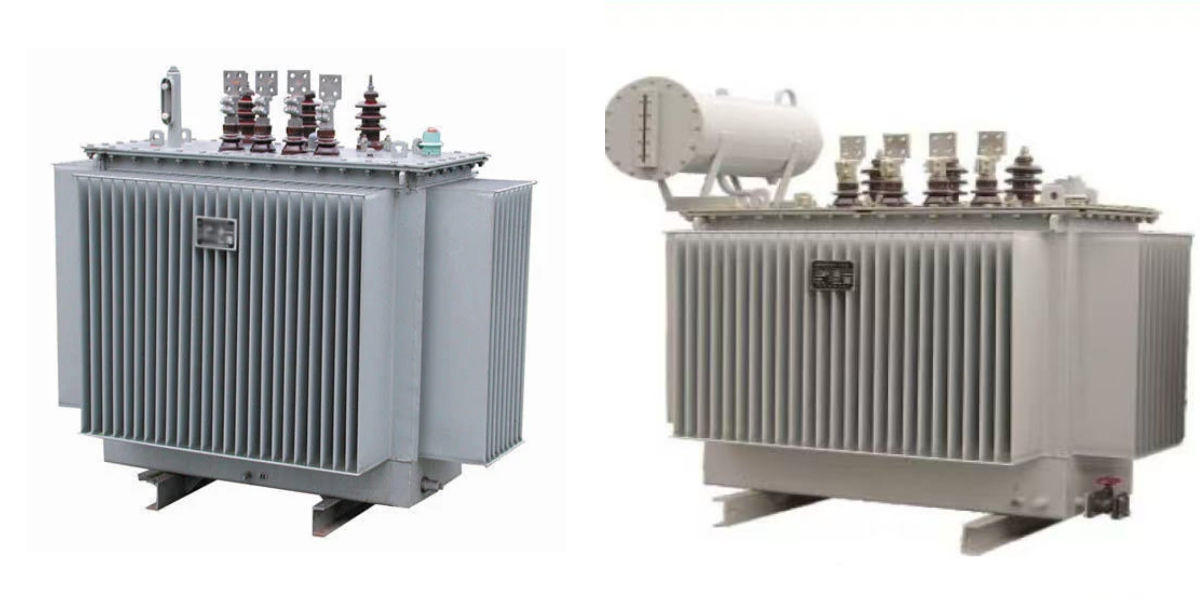
Oil-immersed products adopt fully sealed corrugated oil tanks with excellent sealing performance, which can effectively prevent insulation oil aging and leakage, extend the service life of insulation oil, and no need for frequent oil replenishment; the corrugated sheets can expand and contract with the change of oil temperature, enhance heat dissipation effect, and have good corrosion resistance, adapting to long-term outdoor operation. Dry-type products adopt flame-retardant cold-rolled steel sheet shell, which is electrostatically sprayed on the surface, dust-proof, moisture-proof and corrosion-resistant, and is equipped with ventilation shutters to optimize air channel circulation and improve heat dissipation efficiency.
Cooling System Design
Oil-immersed transformers adopt natural cooling (ONAN) by default, and can be upgraded to forced air cooling (ONAF) and forced oil circulation air cooling (OFAF) according to overload requirements. The cooling system is linked with the temperature control device to automatically adjust the cooling intensity; dry-type transformers adopt air natural cooling (AN), and can be optionally equipped with forced air cooling (AF). The fan adopts low-noise design, and the start and stop are controlled by the temperature controller, which not only ensures the cooling effect, but also reduces energy consumption and noise.
Accessory Configuration
Standard accessories include oil temperature gauge, oil level gauge (oil-immersed), temperature controller, pressure relief valve (oil-immersed), terminal blocks, etc.; optional oil chromatogram online monitoring device, winding temperature online monitoring device and remote monitoring module can be installed to realize real-time monitoring of equipment operation status and fault early warning, facilitating remote management by operation and maintenance personnel and reducing on-site operation and maintenance workload.
2.2 Core Material Selection (Controllable Quality and Outstanding Durability)
Iron Core Material: Low-loss oriented silicon steel sheet (conventional model), amorphous alloy (energy-saving model), all selected from well-known domestic brands, with high magnetic permeability, low loss and strong anti-aging ability.
Winding Material: Oxygen-free copper conductor, with high conductivity, low resistance and high mechanical strength, avoiding conductor deformation and burnout caused by overload heating.
Insulation Material: DuPont NOMEX® insulation paper, epoxy resin (dry-type), natural ester/mineral insulation oil (oil-immersed), with excellent insulation performance, strong heat resistance and in line with environmental protection standards.
Oil Tank/Shell Material: Cold-rolled steel sheet, stainless steel (optional), corrosion-resistant and rust-resistant, adapting to harsh outdoor environments; seals are made of oil-resistant and anti-aging rubber to ensure sealing performance.
3. Core Product Advantages (Outstanding Differentiation, Adapting to Multi-Scenario Requirements)
Strong Overload Capacity, Ensuring Power Supply Continuity
The core advantage is that it can withstand high loads far exceeding the rated load for a short time, without blind capacity expansion due to short-term peak loads, effectively avoiding power supply interruption caused by overload. It is especially suitable for scenarios such as seasonal high loads during rural Spring Festival and busy farming seasons, and industrial equipment start-up impacts, improving power supply reliability and reducing power outage losses. At the same time, the long-term 1.1 times rated load operation capacity can cope with normal load fluctuations without frequent equipment adjustment.
Long Service Life Design, Reducing Operation and Maintenance Costs
Adopting high-quality insulation materials and optimized heat dissipation structure, the temperature rise is stably controlled under overload conditions, and the service life of the equipment will not be reduced due to short-term high loads. The normal service life can reach more than 30 years, which is the same as that of conventional transformers. The equipment has a low failure rate, strong anti-interference and anti-aging capabilities, which can reduce the frequency of on-site inspection and maintenance, reduce the workload and cost of operation and maintenance personnel, and the long-term comprehensive use cost is 20%~30% lower than that of conventional transformers.
Excellent Economy, Reducing Initial Investment
There is no need to configure equipment according to the peak load capacity, and only need to select according to the conventional rated capacity to meet the short-term overload demand, which greatly reduces the initial purchase cost of equipment, power grid occupancy fee and capacity expansion fee. At the same time, the low-loss design can reduce long-term operation electricity costs, balancing the economy of initial investment and long-term operation and maintenance. It is especially suitable for scenarios with large load fluctuations and short peak duration, with outstanding cost performance.
Wide Adaptability, Comprehensive Scene Coverage
According to the needs of different scenarios, two types of oil-immersed and dry-type can be customized, adapting to different voltage levels such as 10kV and 35kV, with a capacity range of 50kVA~20000kVA, which can meet the needs of rural power grids, industrial fields, urban distribution networks, new energy grid connection and other scenarios. Specifically applicable to: short-term high loads during rural Spring Festival and busy farming seasons; industrial impact loads such as metallurgy, chemical industry, mining, electric furnaces and motor group start-up; fluctuating loads of photovoltaic/wind power grid connection; load regulation with large peak-valley difference in urban residential areas and commercial areas; scenarios with high requirements for power supply stability such as data centers and rail transit.
Green and Environmentally Friendly, Meeting Policy Requirements
Adopting low-loss and low-noise design, the no-load and load losses are far lower than those of conventional transformers, which can save a lot of electric energy and reduce carbon emissions during long-term operation; oil-immersed products can choose natural ester insulation oil, which is non-toxic and degradable, and will not pollute the environment; mineral insulation oil can be recycled; dry-type products have no oil pollution and excellent flame-retardant performance, which is in line with the national "double carbon" strategy and environmental protection policies, and adapts to various scenarios with high environmental protection requirements.
Intelligent Optional, More Convenient Operation and Maintenance
Intelligent monitoring and remote control modules can be optionally installed to real-time monitor operation parameters such as winding temperature, oil temperature (oil-immersed), oil level (oil-immersed), current and voltage, with functions such as fault early warning, data statistics and remote start-stop. Operation and maintenance personnel can remotely check the equipment operation status through computers and mobile phones, without 24-hour on-site duty, greatly improving operation and maintenance efficiency and reducing operation and maintenance costs.
4. Typical Application Scenarios (Precise Matching, Solving Actual Power Supply Pain Points)
4.1 Rural Power Grid Scenario
The rural power grid load has obvious seasonal fluctuation characteristics. During the Spring Festival, the number of returning personnel increases, and irrigation equipment starts centrally during the busy farming season, resulting in short-term high load peaks. Conventional transformers are prone to tripping and burning due to overload. High overload special transformers can easily cope with such short-term peak loads without frequent capacity expansion, ensuring the continuity of rural residents' living electricity and agricultural production electricity, reducing power grid transformation investment, adapting to harsh outdoor rural environments, and reducing operation and maintenance workload.
4.2 Industrial Field Scenario
In industrial fields such as metallurgy, chemical industry, mining and mechanical processing, there are equipment such as electric furnaces, rolling mills, crushers and motor groups. Large inrush current will be generated during start-up, which is a typical impact load, which is easy to cause transformer overload. High overload special transformers have excellent impact resistance and overload capacity, can withstand the instantaneous large current during equipment start-up, avoid power supply interruption, and have strong anti-harmonic and anti-unbalanced load capabilities, which can adapt to the complex power grid environment of industrial sites, ensure the normal operation of production equipment, and reduce production losses.
4.3 Urban Distribution Network Scenario
In urban residential areas, commercial areas, office buildings and other areas, the load peak-valley difference is large. The load increases sharply during peak periods (such as summer air conditioning peak and winter heating peak). Conventional transformers need to be configured according to the peak load, resulting in low equipment utilization rate and investment waste during low load periods. High overload special transformers can be configured according to the conventional load capacity, cope with short-term high loads during peak periods, balance load fluctuations, improve equipment utilization rate, reduce urban distribution network capacity expansion investment, and at the same time, the low-noise and low-loss design adapts to the urban residential and commercial environment.
4.4 New Energy and Infrastructure Scenarios
When new energy such as photovoltaic and wind power is connected to the grid, the output is volatile, which is easy to cause power grid load fluctuations, and has high requirements for the overload capacity and stability of transformers; infrastructure scenarios such as data centers and rail transit have extremely high requirements for power supply continuity and stability, and there are short-term load fluctuations. High overload special transformers can adapt to the load fluctuations of new energy grid connection, and at the same time ensure the stable power supply of data centers and rail transit. The optional intelligent monitoring module can realize real-time monitoring of equipment operation status, which is in line with the intelligent operation and maintenance needs of infrastructure scenarios.
5. Specifications, Models and Customization Services (Adapt on Demand, Meet Personalized Needs)
5.1 Conventional Specifications
Voltage Level: 10kV, 35kV (mainstream), special voltage levels such as 6kV and 110kV can be customized.
Capacity Range: 50kVA~20000kVA, which can be flexibly selected according to scenario requirements.
Connection Group Label: Dyn11, Yyn0 (mainstream), supporting on-load tap changing (OLTC) and off-load tap changing, and the tap changing range can be customized.
Product Type: Oil-immersed (fully sealed corrugated oil tank), dry-type (epoxy resin casting), which can be selected as needed.
Insulation Oil Type: Oil-immersed products use mineral insulation oil by default, which can be upgraded to natural ester insulation oil (environmental protection model).
Protection Level: Outdoor model IP54, indoor model IP65 (optional), which can be upgraded according to the installation environment.
5.2 Customization Services
According to the customer's specific use scenarios and load requirements, comprehensive customization services are provided, including:
Overload Multiple Customization: Customize different levels of overload capacity from 1.2 to 2.2 times according to the duration and intensity of peak load.
Structure Customization: Customize iron core and winding structure to adapt to special installation space (such as narrow space, high-altitude installation); customize cooling system to adapt to harsh environments such as high temperature and high humidity.
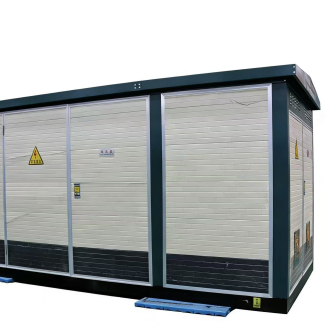
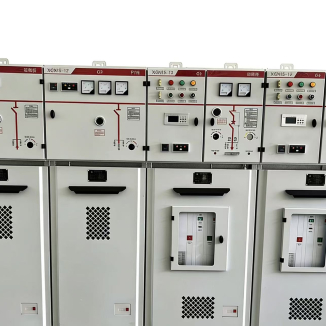
Accessory Customization: Configure accessories such as oil chromatogram monitoring, remote monitoring, lightning protection and grounding as needed to realize intelligent operation and maintenance; customize integrated JP cabinet scheme to integrate transformers, switches and protection devices, reducing on-site installation workload.
Energy Efficiency Customization: According to energy-saving needs, customize amorphous alloy iron core models and super Level 1 energy efficiency products to further reduce losses.
6. Quality Assurance and After-Sales Service
Quality Assurance
The products are produced in strict accordance with relevant national standards such as GB/T 1094 and GB/T 6451. Core materials are all selected from well-known brands. The production process undergoes multiple inspections (raw material inspection, semi-finished product inspection, finished product inspection) to ensure qualified product quality; no-load test, load test, overload test, etc. are carried out before leaving the factory to verify product performance and ensure that it meets design requirements.
After-Sales Service
Provide free installation guidance and commissioning services; the product warranty period is 3 years. If there is a quality problem within the warranty period, free maintenance and replacement of parts will be provided; a complete after-sales response mechanism is established, with 24-hour online consultation, on-site service within 48 hours in remote areas, and regular inspection and maintenance guidance to ensure long-term stable operation of the equipment.